
Introducing the Startup Marketing Investment Framework. A practical approach to deciding what to fund first, what to delay and when to scale.
If you’re deciding where to spend a startup marketing budget, the hard part is rarely finding options.
SEO builds long-term visibility. Paid media gives you faster feedback. Social reaches new audiences. Content builds trust. Email converts existing interest. Each one has a reasonable case behind it.
The real problem is that most startups have more products, services and marketing opportunities than they have budget to support properly. Spread that budget across too many channels, and you get plenty of activity, but not enough focus anywhere to build momentum.
A business can spend months, or even years, moving from agency to agency and channel to channel, chasing activity rather than starting from the goal, before concluding that marketing simply doesn’t work. It wasn’t the effort that failed. It was the sequence.
In my experience, the answer is rarely another channel or another campaign. It’s giving the budget you already have a clearer direction. That might mean using paid media first to test an audience, holding off on SEO until the proposition is clearer, or waiting on a second product until the first has a reliable route to market. The right sequence is different for every business. What matters is that each stage has a clear purpose, enough support to actually work, and evidence for what should happen next.
That’s the purpose of the Startup Marketing Investment Framework: deciding what to prioritise now, what to introduce next, and what needs to be true before you expand.
A website is not a marketing plan
For many startups, the website is the first major marketing investment, and that makes sense as it explains the offer, builds credibility, and turns interest into an enquiry.
But a website doesn’t create demand on its own.
Think of the website as a shop. You’ve built something you’re proud of, a strong storefront, a clear layout, everything easy to find once you’re inside. But if there’s no road leading to it and no signage pointing the way, it doesn’t matter how good the shop is. Nobody will find it.
People still need a reason to visit it, a clear understanding of what’s on offer, and enough confidence to take the next step. If any part of that journey is weak, the website can look finished without doing much commercially.
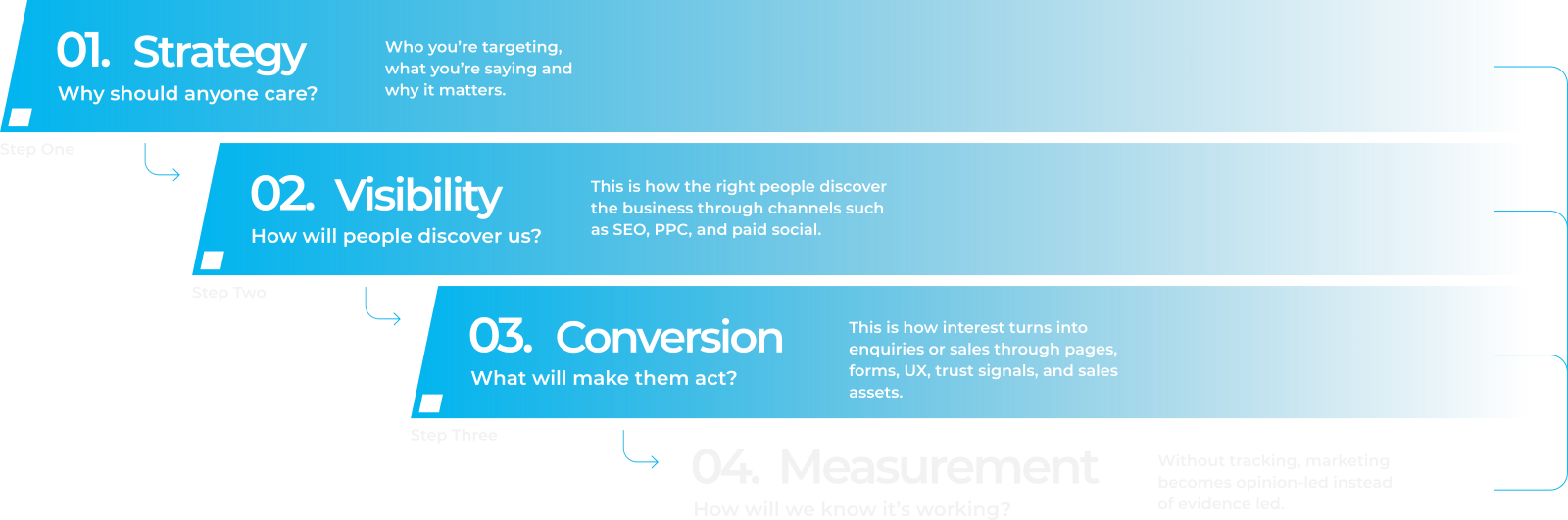
Marketing needs to connect five things:
- The offer – What you’re selling, who it’s for, and why they should choose it
- Visibility – How the right people discover the business
- The website – Whether it explains the offer and builds trust
- Conversion – Whether there’s a simple, convincing route to enquire, buy or book
- Revenue – Whether the business can see if that activity is contributing to growth
This is why the answer isn’t always “more traffic.” The real constraint might be positioning, weak landing pages, poor follow-up, or tracking that doesn’t tell you anything useful. Until you understand the real constraint, investing in another channel just sends more people into a journey that isn’t ready for them.
Why startup marketing budgets lose focus
Budgets rarely lose focus through one bad decision. It happens gradually.
A website, then some SEO. Paid ads because results are needed faster. Social because competitors are active there. Content and email because both clearly have value. Before long, several sensible activities are competing for the same limited budget, and the result looks broad but lacks depth.
Too little paid spend to generate useful data, too little SEO investment to build real visibility, inconsistent social with no clear objective, content with no promotion behind it, tracking bolted on as an afterthought.
None of those channels is the wrong choice. The problem is trying to support all of them at once without enough resource for any single one to work properly. And when the offer, audience, messaging and channel mix are all changing together, it’s hard to tell what’s actually driving progress and what’s holding it back. That gets even harder without proper tracking and reporting — a working CRM and clean data aren’t a checkbox, they take real investment in their own right, and without them nobody can say with any confidence what’s actually working and what isn’t.
A more focused approach gives each stage a purpose: choose the immediate priority, support it properly, measure what happens, then use that evidence to decide what gets added, improved or scaled next.
The five stages of investment
This doesn’t mean every business follows an identical plan. Some already have a clear proposition but weak tracking. Others are generating demand but losing customers through poor conversion. The point of the framework is to identify what’s actually missing, not to default to another channel because the current one feels slow.
1. Clarity.
Before investing in visibility, be clear about who you’re trying to reach, what problem you solve, what you’re offering, why someone should choose it, and which product or service takes priority. This doesn’t need a lengthy branding project, just enough clarity to communicate consistently and judge whether the market is responding. When the audience, proposition and message are all shifting at once, it’s hard to learn anything useful from the results.
This is also where most businesses undersell how specific they need to be. Budget doesn’t multiply when you split it across more products, more audiences and more regions – it divides, and each slice gets too thin to move anything. The instinct is to cover more ground. The right move is to choose less ground and actually hold it. Pick one product and one audience first. Everything else can follow once that one is working.
2. Tracking.
Next, you need to see what actually happens once marketing begins. Where enquiries came from, which campaigns or pages influenced them, whether the leads were any good, whether they converted, and what they were worth.
You’re not trying to track everything, just enough to make better decisions. Without it, the busiest channel can look like the most valuable, even when it has no real connection to lead quality or revenue.
3. Conversion.
Before you significantly increase traffic, give existing visitors a realistic chance of converting through website messaging, landing pages, calls to action, forms, trust signals, sales materials, lead follow-up or CRM processes.
A business can have a visibility problem and a conversion problem at the same time. But sending more people into a weak journey won’t efficiently fix either one. Improving conversion increases the value of almost every channel that follows it.
4. Acquisition.
Once the foundations are credible, you can make a more informed decision about how to generate demand. Paid search where people are already looking and speed matters. SEO where long-term visibility has clear commercial value. Paid social to test audiences and messages before people are actively searching.
The aim isn’t to launch everything at once; it’s to choose the activity most likely to solve the current problem, or produce useful evidence for the next decision.
5. Scale.
Increase investment once there’s evidence the wider system can support it. The proposition is converting, tracking is reliable, lead quality is reasonably stable, and the business can handle more demand without straining delivery. Scale doesn’t just mean spending more on ads. It might mean adding SEO, expanding into a new audience, promoting another product, or investing more in CRM and conversion.
The key is that expansion builds on what’s already been learned, rather than dividing the same budget across even more activities. It also means resisting the urge to scale off the back of one strong month, one big customer or one viral post, look for results that come from a process you can repeat, not a one-off.
What shapes the right marketing mix
Once the foundations are in place, where the budget goes next depends on the business and the market. A channel that works brilliantly for one startup can be completely wrong for another with a near-identical product.
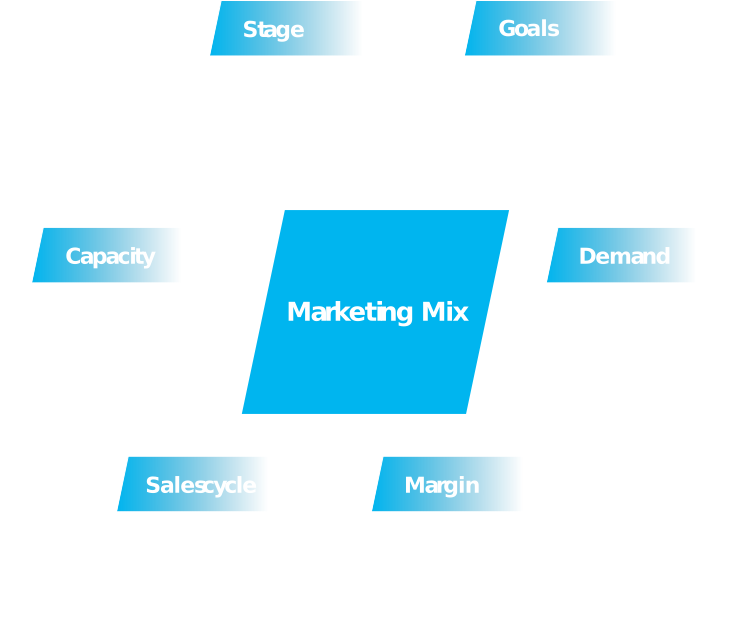
Six things shape that decision.
Business stage.
A pre-launch business needs to test the offer and generate its first real signs of demand. One with early traction needs consistent lead generation. A more established business may be ready to expand into new channels or audiences.
Commercial goal.
What needs to happen in the next 90 days? First sales, more qualified enquiries, testing a new product, reducing reliance on one channel — the channel should support the goal, not become it.
Existing demand.
If people are already searching, paid search or SEO offer a fairly direct route to reach them. If the product is new or unfamiliar, you may need to create awareness first, which favours paid social, PR, partnerships or content. Demand capture and demand creation need different budgets and different timeframes.
Capacity.
Can sales and fulfilment actually handle more enquiries? A campaign can look successful on the surface while quietly creating pressure elsewhere in the business.
Sales cycle.
A longer decision process makes follow-up more important, giving content, email, CRM and remarketing a bigger role. Don’t judge a channel on immediate sales when the buying process takes months.
Margin.
A campaign can generate revenue and still be a poor investment once margin, sales time and fulfilment are accounted for. This is why decisions can’t be made on traffic or lead volume alone.
A practical way to decide what comes first
Founders don’t need the perfect long-term plan from day one. They need to make the next decision well. Work through these six questions:
- What needs to happen commercially? Be specific about the next 90 days. “Grow the business” is too broad to guide a decision.
- What’s currently getting in the way? Lack of visibility, unclear messaging, poor conversion, weak follow-up, limited capacity? Until the real bottleneck is clear, picking a channel is partly guesswork.
- Which activity is most likely to address it? Choose one primary activity – the one most likely to solve the immediate problem, or produce useful evidence for the next decision.
- What does that activity need around it? No channel works in isolation. Paid media needs landing pages and reliable tracking. SEO needs technical foundations and content. Email needs a working CRM and clear segmentation. Budget for the activity and the work that makes it effective.
- What will success actually look like? Not just traffic or lead volume. Look at lead quality, conversion rate, close rate, cost of acquisition, revenue contribution, margin and payback period.
- What needs to be true before you expand? Lead quality is consistent. The proposition is converting. Tracking is reliable. The economics work. The business can handle more demand. And the current priority has built enough momentum to protect. That gives you a reason to expand, rather than adding activity because the current plan feels slow.
How businesses with multiple products or services should expand
This is where a lot of marketing plans start to lose focus.
A business with several services or product lines will find a reasonable case for investing in each one. The temptation is to divide the budget across all of them. In practice, that usually means every area gets some activity, but none of them get enough to build real momentum.
A more effective approach is to choose one priority first, based on the strongest combination of existing or achievable demand, commercial value, margin, strategic importance and likelihood of gaining traction.
That doesn’t mean ignoring the rest of the business. It means establishing one reliable route to growth before trying to support everything at once.
Once that priority is working, it should keep enough investment to protect the progress it’s made. The next product or service can then be introduced in a controlled way, tested through paid media, built out with SEO foundations, or given a focused campaign, funded by additional budget rather than by taking everything away from what already works.
That last point matters more than it sounds. Moving the same limited budget from one priority to another doesn’t build on progress, it resets it. Six months of hard-won traction for one service can disappear the moment its budget gets pulled to promote something else, long before the second one has had time to establish itself.
Quick summary
This isn’t a theoretical model. It comes from years of retained work across very different businesses (fintech, ecommerce, specialist recruitment, manufacturing) with different offers, different audiences and different budgets. The one thing that kept showing up wasn’t the channel. It was sequencing.
The businesses that built in stages outgrew the ones spreading the same budget across everything at once. That pattern is what the framework is built from.
There’s no single marketing plan every startup should follow; the right starting point depends on the offer, the audience, the budget and what needs to happen commercially next. But the sequence itself doesn’t change. Choose the priority, give it enough support to work, measure what happens, then let that evidence decide what’s added, increased or introduced next.
That’s what the Startup Marketing Investment Framework is built to help you do.
No email required
The complete framework covers:
- How to decide what should receive investment first
- The sequence from clarity through to scale
- What should influence the choice of marketing channel
- How priorities change as a business gains traction
- Actual budget splits across strategy, website and paid media at each stage of growth
- When to increase investment or expand into new areas
- How businesses with several products or services can grow without spreading the budget too thinly

About the author
Oliver Westrup
Retained Services Director at Reach Digital
Oliver Westrup is Retained Services Director at Reach Digital and the developer of the Startup Marketing Investment Framework. He works with founders and marketing teams to sequence budget, prioritise channels, and build marketing systems that hold up as a business grows.
Did you find this article useful? Share it with a friend or colleague
Jump to a section:
- Intro
- A website is not a marketing plan
- Why startup marketing budgets lose focus
- The five stages of investment
- What shapes the right marketing mix
- A practical way to decide what comes first
- How to expand with multiple products or services
- Download the Startup Marketing Investment Framework (no email required)